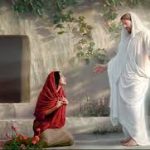
 The post on Facebook read, “We don’t need religion to be moral – in our hearts we know what’s right.’ It’s a popular sentiment. “Just follow your heart.” It sounds so good, so logical, so easy. But is it wise?
What if your heart and my heart disagree? And what if our disagreement means we’re at polar opposites on an issue that demands conflicting actions? Let’s assume we both, at the same time, come upon a man ready to jump off a bridge and commit suicide. I want to let him jump and you want to stop him. I believe he has a right to do it, and should be allowed to do it – after all, it’s what his heart is telling him to do. So I will do whatever is necessary to be sure he jumps. But you believe it’s wrong and that he should be stopped, and will do whatever is necessary to stop him. How do we resolve our differences – after all, we can’t both do what our heart tells us to do without major conflict. How do we know what’s ‘right?’

In Bunyan’s classic “Pilgrim’s Progress” Christian and Ignorance have a conversation.
Christian: “What leads you to believe that you have given up all for God and Heaven?”
Ignorance: “My heart tells me that I have.”
“But is your heart reliable? The Bible says, ‘He that trusts in his own heart is a fool.’”
”That is spoken of a fool. I’m no fool. My heart is wise and good.”
“But how do you know that? What means have you of testing your heart?”
“My heart comforts me in the hope of Heaven.”
“That may be through its deceitfulness. Jeremiah the prophet said, ‘The heart is deceitful above all things, and desperately wicked: who can know it?’ A man’s heart may give him hope when there are no grounds for his hope.”
“But my heart and my life agree, so my hope is well grounded.”
“What proof have you that your heart and life agree?”
“My heart tells me so.”
“Your heart tells you so! Except the Word of God bears witness, other testimony is of no value.” [i]
We may not agree on what the standard should be, but the fact is we need an unchanging standard – a holy, righteous guide. The Bible qualifies.
“For the Word of God is living and active. Sharper than any double-edged sword, it penetrates even to dividing soul and spirit, joints and marrow; it judges the thoughts and attitudes of the heart. Nothing in all creation is hidden from God’s sight. Everything is uncovered and laid bare before the eyes of him to whom we must give account.” (Heb. 4:12) The ‘one to whom we must give account’ is Jesus, the holy righteous one who knows our hearts. “… God knows your hearts. What is highly valued among men is detestable in God’s sight.” (Luke 16:15) “I am He who searches hearts… (Revelation 2:23). “For it is from within, out of a person’s heart, that evil thoughts come…” (Mark 7:21) So before you follow your heart, check it. Jesus exposes our hearts so we can open them to His Spirit.
Ezekiel prophesied, “I will give you a new heart and put a new spirit in you; I will remove from you your heart of stone and give you a heart of flesh. And I will put my Spirit in you and move you to follow my decrees and be careful to keep my laws.” (36:26-27). Is your heart filled with God’s Spirit? If so, follow it. If not, ask Jesus to fill your heart today. It’s the right thing to do.
[i] John Bunyan, Pilgrim’s Progress in Today’s English, Moody Publishers, Chicago, © 1992 The Moody Bible Institute of Chicago, p. 139



 did not consider equality with God something to be used to his own advantage; rather, he made himself nothing by taking the very nature of a servant, being made in human likeness. And being found in appearance as a man, he humbled himself by becoming obedient to death—even death on a cross!”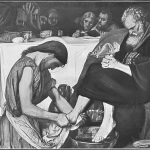

 black and white TV with pre-recorded programs to cameras mounted on computer monitors which enable us to see – live – the person with whom we are communicating. What sense does it make to fight this great progress? Why not learn to use it in creative and wholesome ways? Consider the impact of this great new – and still changing technology – during the COVID 19 pandemic. Businesses, families, churches, medical facilities – to mention a few – have found valuable new ways of communicating and being together.
 We need to prayerfully welcome, manage
  and adapt to change – make it our friend and ally. The key is always to maintain our principles and core values while being flexible with our techniques and methods. “Methods are many, principles are few; methods often change, principles never do.” Only God, after all, never changes. He is the same yesterday, today, and forever. That means His character and His heart never waver; but how He works through and among His people and in His world is always changing. Author Henry Blackaby wrote, “God is always at work, and our job is to find out what’s He’s up to and join Him.” That is the best approach to change I know. Keep close to Christ and we will not only ride the winds of change – we will create the changes!
 Burger King popularized the phrase “Have it your way.” Through it they promoted the idea that whatever we wanted on our burger we could have. What we wanted we received. Unfortunately, over the years, the phrase was co-opted by our culture to encourage doing whatever we want whenever we want. I wonder if we are now having it our way?
 Three times Paul mentions God ‘gave
  them over’. There are times when God removes His hand of protection and safety to let humankind have its own way –it’s as if He says, “If that’s what you want, so be it. I’ll let you have it your way.” And we reap the consequences of our actions. Indeed we have sown the wind and reaped the whirlwind.
 Jesus told His disciples “It is for your good that I am going away” (John 16:7). Would the disciples be better off without Jesus? What good is an absent Jesus? The best expression of the answer, I believe, comes from the Heidelberg Catechism question and answer 49 which deals with the meaning of Jesus’ ascension. It has a three part answer.

 plane from flying. But when a plane reaches a certain speed, the law of aerodynamics takes over and frees the plane from the effects of gravitational force. So the Holy Spirit frees us from the gripping, magnetic power of sin and sets our eyes and minds on Christ.
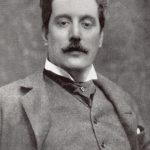 Puccini was one of the greatest composers of Italian opera, having composed such works as La Boheme and Madame Butterfly. He began his last opera, Turandot, as he was dying of cancer, convinced that if he did not finish it, his students would; and he died before it was completed. After his death the opera was completed, and its premiere performance was held, under the direction of Arturo Toscanini, who was the greatest conductor of that time and also one of Puccini’s students. All went brilliantly until at the end of the first scene in the third act, Toscanini abruptly halted the performance, laid down his baton, turned to the audience with tears streaming down his face, and said, ”Thus far the master wrote, but he died..” There was stunned silence. Then, triumphantly he picked up the baton and said, “But his disciples have completed his work.” Since Jesus assists us with His power, we can be faithful. Let’s finish the work!

 It finally dawned on me that my mind has a limit and when it’s on information overload there is no room for God’s voice to be heard. I need to work hard at guarding my mind. The Bible, in fact, states this clearly. “Be careful how you think; your life is shaped by your thoughts” (Proverbs 4:23 GNT). The issue then is how to shape our thoughts. The Apostle Paul spelled it out clearly. “Rejoice in the Lord always. I will say it again: Rejoice! Let your gentleness be evident to all. The Lord is near Do not be anxious about anything, but in every situation, by prayer and petition, with thanksgiving, present your requests to God. And the peace of God, which transcends all understanding, will guard your hearts and your minds in Christ Jesus” (Philippians 4:4-7)

 strength…” (Isaiah 30:15). “Stand at the crossroads and look; ask for the ancient paths, ask where the good way is, and walk in it, and you will find rest for your souls” (Jeremiah 6:16) “Come to me, all you who are weary and burdened, and I will give you rest” (Matthew 11:28).
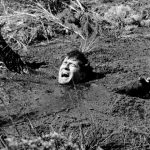 slow down. Consider this. “If you ever fall into quicksand, the most important thing to remember is this: take your time. Quicksand, unlike water, will not move out of the way to let you pass. Instead, it resists movement. Flailing about will only cause you to sink deeper. But slowly it gets you to shore.” (2)(3)